
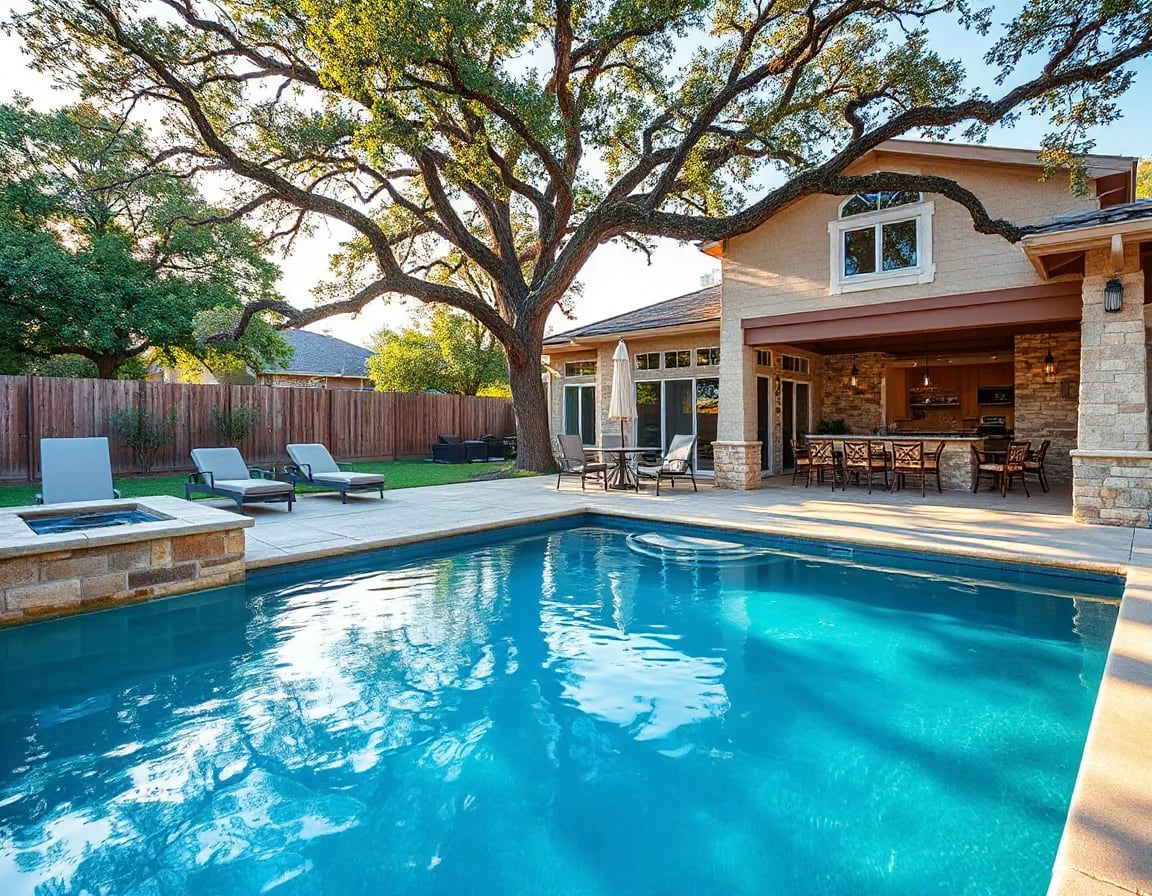
A Leander backyard can be more than extra square footage—it can be a practical outdoor retreat through a long Central Texas warm season. The features that matter most are the ones that manage sun, heat, drainage, and maintenance while still making the space enjoyable morning, noon, and evening. Use this seven-point test when comparing homes, planning updates, or preparing a property for the market.
Start With the Shade-to-Sun Balance
In Leander, Texas, USA, a backyard’s usability often comes down to when and where the sun lands. A large open lawn may look appealing in a listing photo, but direct afternoon exposure can make patios, play areas, garden beds, and seating zones difficult to use during the hottest part of the day. The strongest outdoor spaces usually create choices: a sunny area for cooler-weather use and a reliably shaded place for summer afternoons.
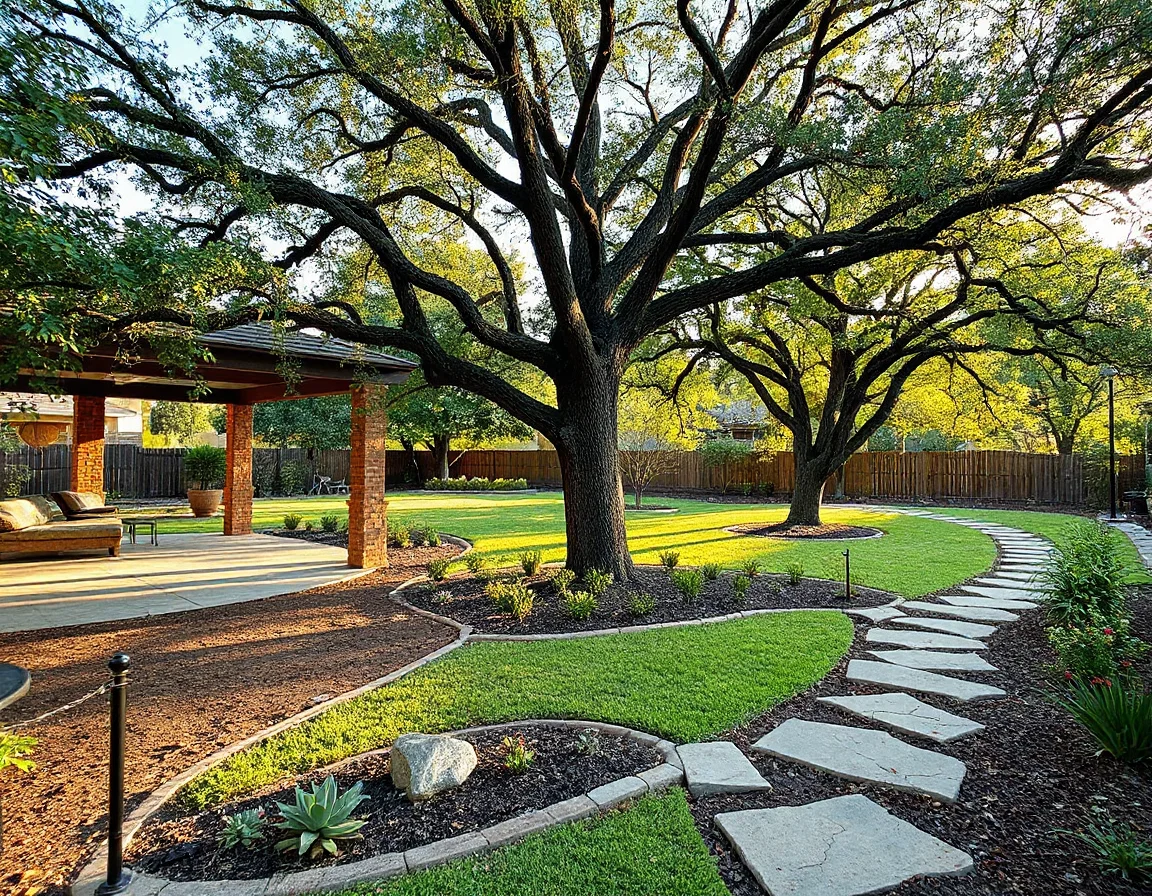
Feature 1: Mature trees or a workable shade plan. Existing tree canopy can offer immediate relief, though buyers should also look at tree health, placement, and how roots interact with hardscaping. Where mature trees are limited, a well-positioned pergola, covered patio, shade sail system, or roof extension can make a major difference. Consider the western edge of the yard in particular; blocking late-day sun can improve comfort without enclosing the entire space.
Feature 2: A covered patio with useful depth. A narrow strip of roof cover may protect a doorway, but it may not create a true outdoor room. Look for enough depth to accommodate chairs, a table, or a grill zone while maintaining a clear path to the house. Ceiling fans rated for outdoor use, recessed lighting, and durable flooring can extend the patio’s usefulness after sunset. When reviewing a home, notice whether the cover shades the seating area at the time you are likely to use it, not just whether it appears substantial from indoors.
A backyard does not need every square foot under cover. In Central Texas, a shaded destination paired with open space for flexible use is often more practical than a yard designed around a single feature.
Orientation matters as much as the structures themselves. A north- or east-facing patio may receive gentler light at common gathering times, while a west-facing patio may benefit from added screening, landscaping, or a deeper roofline. Ask for a showing later in the day if possible. A brief visit in afternoon heat can reveal more about a backyard’s day-to-day performance than photos taken in bright morning light.
Build for Cooling, Not Just Appearance
Outdoor improvements work best when they respond to the local climate rather than copying a design that belongs somewhere cooler or wetter. In Leander, heat retention, reflected glare, and water use all deserve attention. Material choices can influence how comfortable a space feels underfoot and how much maintenance it requires over time.
Feature 3: Heat-conscious hardscaping. Dark surfaces can become noticeably hotter in direct sun. Light-toned concrete, natural stone selected for outdoor conditions, textured pavers, and shaded pathways may all help create a more comfortable setup. The goal is not to avoid hardscaping; it is to balance it with shade, planting areas, and circulation routes that do not force people across sun-baked surfaces. For any existing deck or patio, inspect drainage, cracks, settling, and transitions at doors and steps.
Feature 4: Drought-aware planting and irrigation. A lush landscape can be attractive, but an outdoor plan that demands frequent watering may create ongoing work and expense. Native and adapted plants, mulch beds, efficient drip irrigation, and thoughtfully grouped plantings can help conserve water while maintaining texture and seasonal color. A buyer should ask where irrigation zones run, whether the controller is functioning, and how the system has been maintained. A seller can make the yard easier to understand by trimming overgrowth, refreshing mulch, and repairing visible irrigation issues before listing.
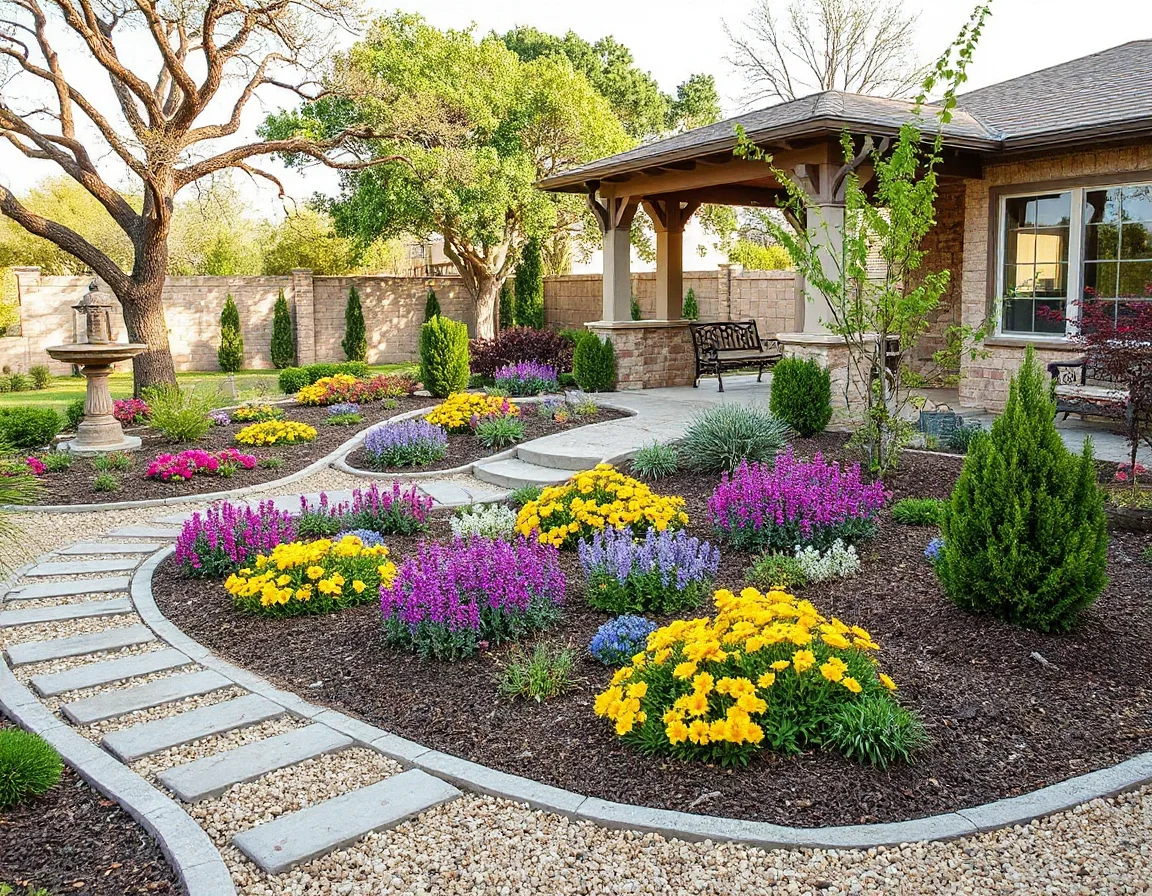
Feature 5: Air movement where it counts. Ceiling fans beneath a covered patio, open-sided shade structures, and breezeways between the home and yard can support more comfortable outdoor time. Fans do not lower the temperature, but moving air can make shaded spaces feel less stagnant. If a property includes an outdoor kitchen or gathering area, check whether its seating is placed where air can circulate rather than directly against a heat-reflecting wall.
Water features and pools can be appealing additions, but they should be evaluated as complete systems rather than visual amenities alone. Review fencing, gates, equipment condition, surface wear, drainage, maintenance records, and the amount of usable deck space that remains in sun and shade. A smaller, carefully designed plunge pool or shaded water feature may suit a property’s footprint better than a large installation that dominates the yard. The right choice depends on maintenance preferences, budget, and how the space will actually be used.
Check the Details That Protect the Yard Over Time
A comfortable backyard needs to handle sudden rain as well as intense sun. Central Texas weather can bring quick, heavy downpours, so drainage is not an afterthought. During a showing, look for low spots, standing water, soil washing away from beds, downspouts that empty near the foundation, and patio slopes that direct water toward the house. These are useful observations whether the home is newly built or has been established for years.
Feature 6: Intentional drainage and grading. Swales, French drains, catch basins, extended downspouts, gravel channels, and carefully pitched hardscape can all help manage runoff. Not every yard needs every solution, but water should have a clear route away from the home. If drainage improvements are visible, ask when they were installed and what issue they were intended to address. For sellers, correcting obvious drainage concerns before marketing can help buyers focus on the backyard’s strengths rather than its unknowns.
Feature 7: Storage and durable utility zones. The most livable backyards leave room for the practical pieces: bins, garden tools, hoses, outdoor cushions, grill supplies, and seasonal equipment. A well-placed storage shed, screened utility area, weather-resistant cabinet, or side-yard storage zone can reduce clutter on the patio. Check for exterior outlets, hose connections, lighting, and access gates as well. These small details often determine whether a backyard feels easy to maintain or constantly in need of rearranging.
Fencing deserves a close look, too. Beyond defining the yard, it can help with privacy, wind, and the visual organization of outdoor zones. Inspect posts, gates, hardware, and any visible warping or deterioration. If the property is part of a homeowners association, review applicable guidelines before planning major changes to fencing, structures, lighting, or landscaping. A clear understanding of maintenance responsibilities and approval processes helps avoid surprises after closing.
Use the Backyard Test When Comparing Homes
When touring homes in Leander, move beyond the question of whether the yard is “big enough.” Stand in the shade, look toward the west, identify where runoff might travel, and picture where outdoor items would be stored. Notice whether the home has a natural connection to the patio through large doors, visible sightlines, or convenient kitchen access. These details can shape how often the space is used far more than a single dramatic feature.
For homeowners preparing to sell, the same checklist can guide smart pre-listing work. Clean outdoor surfaces, define seating areas, remove excess clutter, repair gates and irrigation heads, and show the yard’s shade options at their best. A backyard does not have to be elaborate to be compelling; it needs to feel cared for, functional, and ready for the Texas seasons ahead.
The best Leander backyard is not one-size-fits-all. It is a space where shade, surfaces, planting, drainage, and storage work together in a way that supports everyday life. By looking closely at these seven features, buyers can compare outdoor spaces with more confidence, and sellers can highlight the practical value already waiting beyond the back door.